
How much does forestry mulching cost per acre in Alabama?
Forestry mulching in Alabama runs about $400 to $1,500 per acre in published guides, or $125 to $300 an hour, with light underbrush at the bottom of the range and dense growth with larger stems at the top. Locally, one Baldwin County operator publishes day rates of $2,500 for a smaller machine on a half-acre to one-acre underbrush job and $4,000 a day for high-horsepower machines that cover two to five acres daily.
Those are published market ranges, not our rate card. Our own forestry mulching quotes come from walking the parcel and reading the growth, but the numbers below will land your budget close before anyone loads a trailer.
What do the published per-acre ranges look like?
| Source | Per-acre range | Notes |
|---|---|---|
| HomeAdvisor | $400 – $1,500 | National average about $500; $125 – $400 per hour by density |
| Fixr | $400 – $600 | Updated Jan 2025 |
| Bob Vila | $400 – $600 | Lightly wooded clearing $500 – $2,000 by comparison |
| LawnStarter | $400 average | Or $150 – $250 per hour |
| Angi | $1,000 – $2,500 | $150 – $300 per hour |
| Southeast regional guide | $1,200 – $3,500 | Light brush from $500; heavy mixed hardwood to $6,000+ |
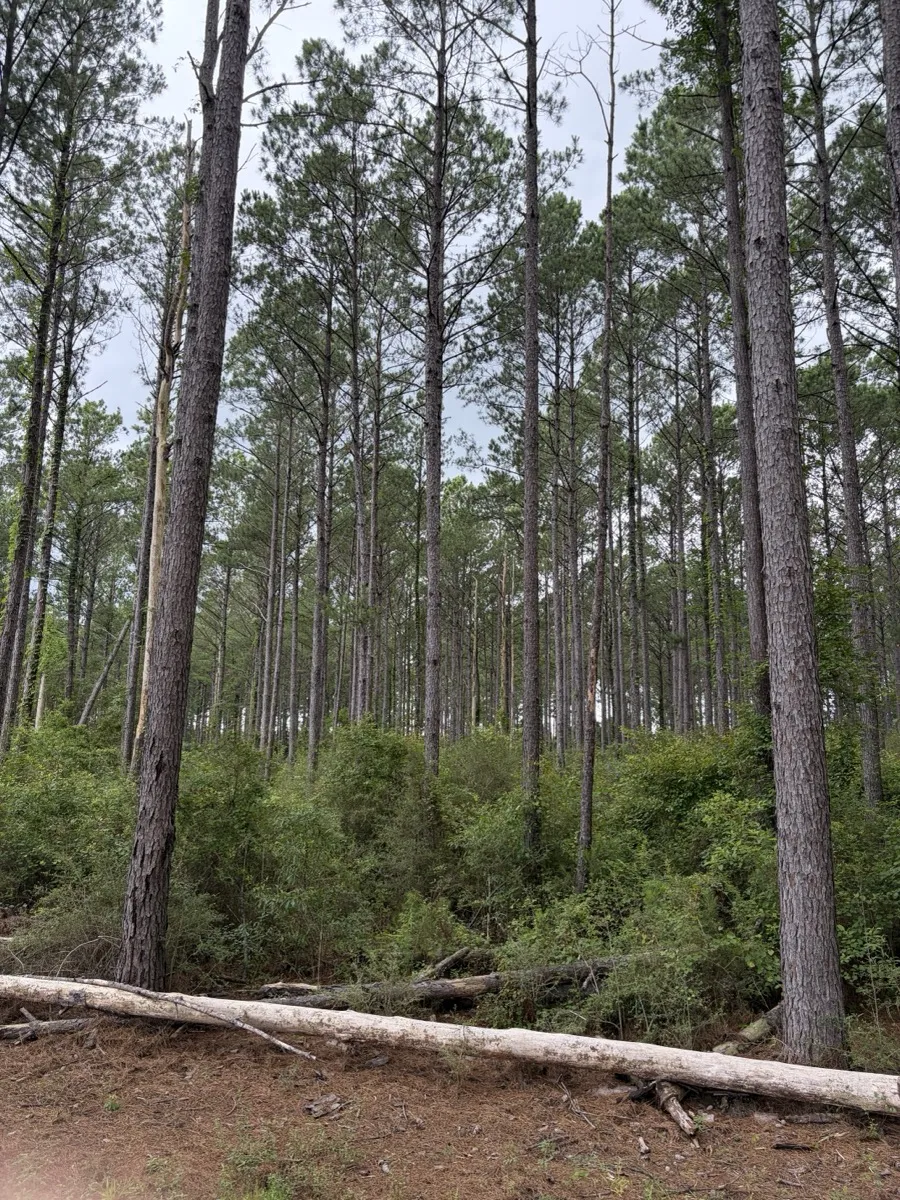
The spread is real and it comes down to what is standing on the ground. A parcel of waist-high brush and pine saplings mulches fast. A tangle of hardwood thicket with 8-inch stems mixed in takes several times the machine hours per acre.
Why does mulching usually beat traditional clearing on price?
Traditional land clearing pushes everything down, then has to deal with it: piles to burn where burning is allowed, or loads to haul to a landfill, plus stumps that still need grinding or grubbing. Every one of those is a line on the invoice.
Mulching skips all three. The machine grinds brush and small trees where they stand into a mulch layer that stays on the ground. Guides put the savings around 20 to 40 percent against conventional clearing, and the gap widens on parcels where haul-off distance is long or burn bans are in effect. In Baldwin and Mobile County, burning is often the harder option anyway.
What moves the price up or down?
- Density. Guides tier it as light brush, medium, and heavy. Time per acre runs about 3 to 5 hours for light growth, 5 to 8 for medium, and 8 to 10 or more for heavy stands.
- Stem size. Trees under 4 inches are quick work. Skid steer mulchers handle 6 to 8 inches. Past 8 inches, trees usually get felled first and can carry a per-tree surcharge of $25 to $100 in published pricing.
- Terrain. Moderate slopes add roughly 20 to 30 percent in guide pricing; steep or rocky ground can add 40 to 60 percent. Most of coastal Alabama is flat, which works in your favor.
- Wet ground. Saturated soil ruts and tears under a machine. Operators wait it out after heavy rain rather than damage the parcel, so low ground here can push the schedule.
- Mobilization. Some firms add a $150 to $300 trip fee. Distance from the operator’s base matters more on small jobs.
Where does that leave a typical South Alabama job?
For a one-acre lot of pine saplings and underbrush, the local day-rate math and the national guides land in the same neighborhood: a single day of machine work. For five to ten acres of mixed growth, plan on multiple days and a heavier machine, which is where per-acre pricing drops but the total climbs.
The honest way to price it is to look at it. We walk the parcel, flag the trees that stay, read the stem sizes and the wet spots, and give you a written number, free, before any machine shows up. If part of the ground has grown past what mulching handles well, you hear that too, with a separate number for clearing that section.