
How do you prepare land for hurricane season in South Alabama?
Handle the trees before June, and the drainage before the trees. Storm prep on this coast means taking down the dead and dying pines within falling distance of what you love, thinning the brush load around structures, and making sure ditches, culverts, and grade can move a tropical rain. All of it is cheaper, calmer work in March than in the week a cone shows up.
We work this ground year-round and clean it up after every blow - Sally alone kept crews busy for months - so this checklist comes from the cleanup side of the business: the damage we keep meeting that prep would have prevented. Our forestry mulching and clearing crews handle every item on it.
Which trees are the ones to worry about?
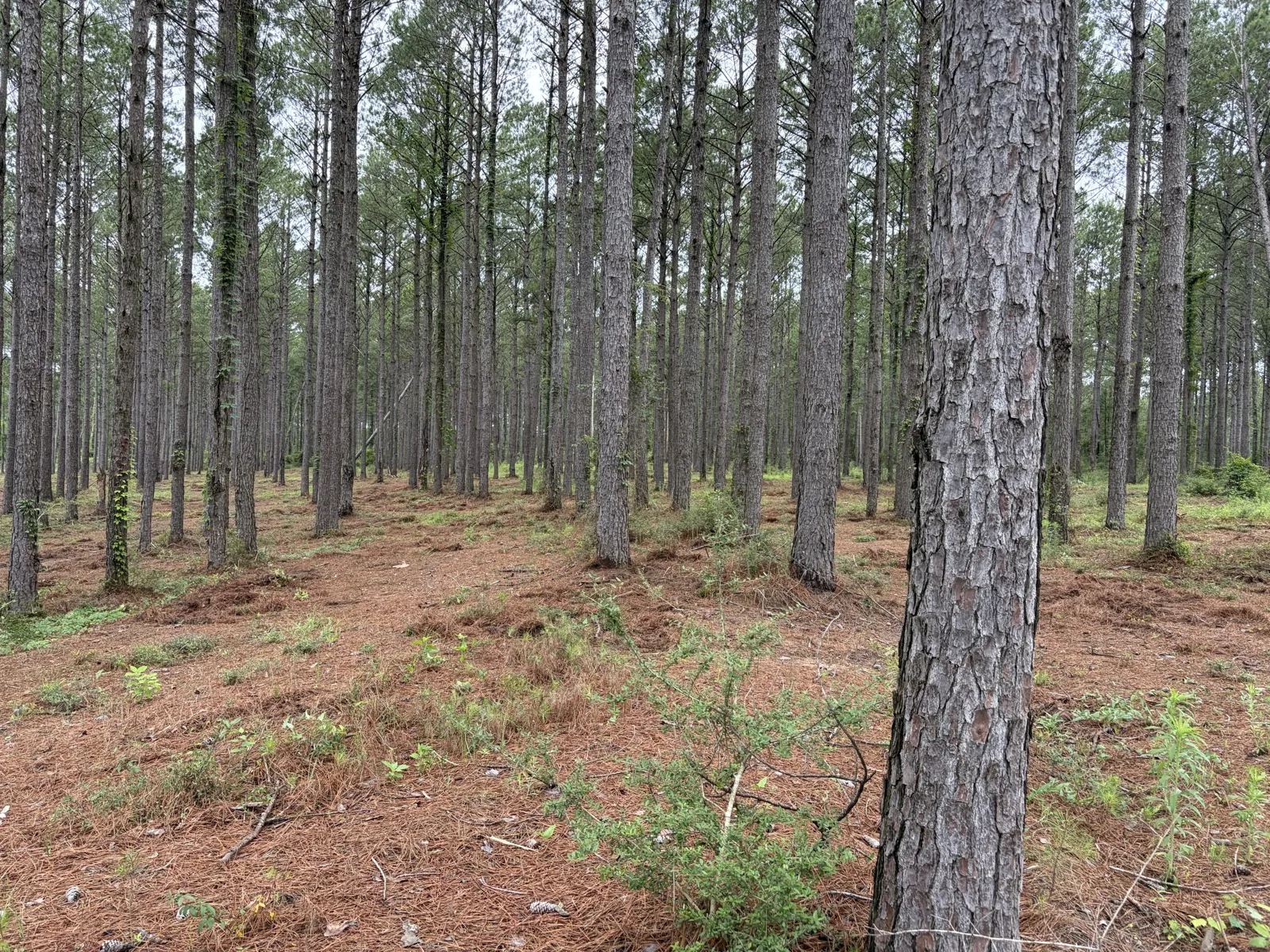
The dead ones first, without sentiment. A dead pine is a falling schedule with no date on it, and inside falling distance of the house, drive, well, or power drop it is the highest-return removal on the property. After the dead: dying and beetle-struck pines, trees with visible lean and heaved roots, and the tall lone pines left standing after everything around them was cleared, which catch wind they never grew up handling.
| Priority | Target | Why |
|---|---|---|
| 1 | Dead/dying trees within falling distance of structures | The storm will fell them; you choose where |
| 2 | Leaning trees and heaved root plates | Already failing, wind finishes it |
| 3 | Lone tall pines exposed by past clearing | Full wind load, no shared shelter |
| 4 | Brush and debris load near buildings | Windborne material + blocked access |
| 5 | Overhanging limbs on drives and drops | The stuff that traps you at home after |
Healthy trees in groups mostly ride storms out, and wholesale clearing is not the goal - the goal is removing the decided failures and reducing what the wind gets to throw.
What does brush and ground prep actually buy?
Access and simplicity, mostly, and both matter more after the storm than during it. Open, mulched ground around structures gives falling limbs less to snag, gives you room to work, and turns post-storm cleanup into a machine job instead of an archaeology dig through thicket. A mulching pass on the overgrown edges near the house is spring work that pays off in September.
Drainage is the rain half of the same insurance. Gulf storms bring their damage in inches of water as much as miles of wind, and ground that sheds it - ditches cut, culverts open, grade falling away from slabs - takes a foot of rain as a mess instead of a loss. We walk the water paths on any storm-prep visit, because a clogged culvert found in May costs almost nothing and one found mid-storm costs whatever it decides to.
How does the after-storm side work?
In order, once it is safe to get equipment in. Driveways and access get opened first, then the broader clearing and debris work parcel by parcel. Structures that took real damage fold demolition into the same effort. A tree resting on a house or a power line is tree-service and utility work first; we clear it once it is on the ground. Storm calls get scheduled by access and safety first.
The best version of that phone call is the one that never happens because the dead pine came down in April. If your parcel has candidates - and after the last few seasons, most around here do - the site visit is free and tells you which trees are worries and which are fine. Call (251) 747-7839 or start at the contact page. June always comes.