How much does a concrete slab cost in Baldwin County?
A new concrete slab costs about $6 to $12 per square foot installed, according to HomeGuide. Angi puts it at $4 to $8 per square foot, with a typical professional job at $3,600 to $7,200. Home improvement in Alabama runs about 12% below the national average, so prices around Baldwin County tend to land low.
Ready-mix is cheaper in Alabama too, at about $125 to $165 per cubic yard against $140 to $195 nationally. These are market figures, not our prices. We pour shop, shed and RV pads, and your number comes from a free written estimate after an on-site look.
How much does a concrete slab cost by size?
HomeGuide puts a 10 by 10 slab at $600 to $1,200 and a 20 by 20 at $2,400 to $4,800. A 40 by 40 runs $9,600 to $19,200 installed. Every row comes from HomeGuide’s 2026 guide, with common uses at the bottom.
| Slab | Square feet | Published installed range |
|---|---|---|
| 10 by 10 | 100 | $600 to $1,200 |
| 12 by 12 | 144 | $860 to $1,700 |
| 20 by 20 | 400 | $2,400 to $4,800 |
| 20 by 30 | 600 | $3,600 to $7,200 |
| 30 by 30 | 900 | $5,400 to $10,800 |
| 40 by 40 | 1,600 | $9,600 to $19,200 |
| Shed slab, 10 by 10 to 20 by 20 | 100 to 400 | $600 to $4,800 |
| Two-car garage floor | 400 and up | $2,400 to $6,900 |
| RV pad | 200 to 700 | $1,200 to $8,400 |
Divide any size row by its square feet and the math comes out near $6 to $12 per square foot. The RV pad range is wide because RV pads run anywhere from 200 to 700 square feet. Where your slab lands in its row depends on what it has to carry and the ground under it. Size the slab to what will sit on it, plus room to walk and work around it.
What moves the price of a concrete slab?
Size sets most of the price, and thickness and steel move it from there. HomeGuide puts materials at $3 to $7 per square foot and labor at $3 to $5 on average. Angi says its typical job price depends on thickness and finish.
Most slabs are 4 to 6 inches thick. One cubic yard of concrete covers about 81 square feet at 4 inches. That puts a 4-inch, 20 by 20 slab at just under 5 cubic yards. At 6 inches, the same slab takes half again as much concrete.
HomeGuide notes that thick slabs are more stable but take more materials and labor. Angi lists standard concrete at about $6 per square foot and rebar-reinforced concrete at about $7. It also names the base prep, the forms, the finish and the local price of concrete as cost factors.
Does a shop, shed or RV pad need rebar?
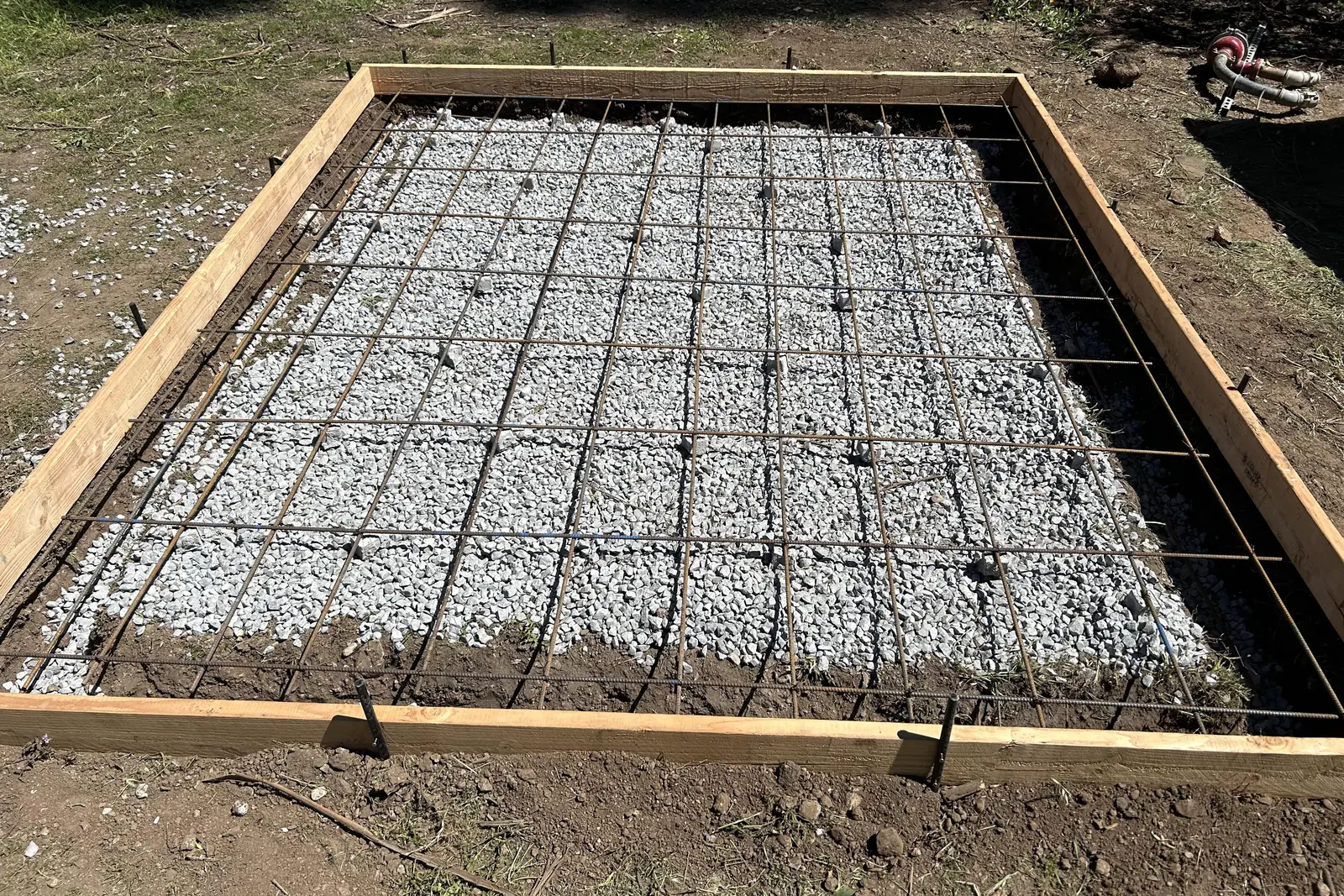
It depends on the load and the ground. Rebar means steel bars set in a grid inside the slab, which Angi calls the standard option for structural slabs. The same guide calls reinforcement ideal for load-bearing slabs like driveways.
HomeGuide says most shed slabs are about 4 inches thick and usually need no reinforcement. Most two-car garage floors are reinforced concrete 4 to 6 inches thick. An RV or boat pad carries vehicle weight, so plan it like the garage floor. A shop floor or equipment slab that carries vehicles or machines is the same.
Angi adds that reinforcement can cut the risk of cracking where the soil moves a lot. On the Gulf Coast, sand shifts and clay swells, so the soil itself can be a reason to add steel. We set the steel by the load and the ground we find on site.
Why does the ground under a slab matter on the Gulf Coast?
A slab is only as steady as the ground under it. HomeGuide notes that concrete slab foundations tend to shift and crack in unstable soil. Summer downpours are what undermine slabs here, so the base and the drainage decide whether a slab stays flat.
Mobile averages about 67 inches of rain a year, the most of any metro in the lower 48 states. July alone averages more than 7 inches. Water that runs under a slab can wash out the ground it rests on. That rain has to go somewhere, and the grade decides where.
Near the coast, sandy loam drains fast and shifts. Around Gulf Shores and Orange Beach, the ground is loose sand with the water table a few feet down. Inland, red clay holds water and swells. It will not compact when it is worked too wet, so base work on clay waits for drier ground.
The Robertsdale soil series, named for the Baldwin County town, is somewhat poorly drained. Water moves through it slowly, and it stays soaked near the surface through late winter and spring. Much of Foley sits on flat pine flatwoods with the water table close to the surface. On ground like that, the grade has to send water away from the pad before any concrete goes down.
HomeGuide puts leveling or regrading at $0.40 to $2.00 per square foot. That is the dirt work under the pad, and on wet ground it matters as much as the concrete. Angi notes that grading and compacting the soil helps prevent uneven settling and cracking later. If the whole site sits low, our guide to building up a house pad covers raising the ground first.
What does a slab job with EMCO Builders look like?
It starts with an on-site look and a free written estimate. Then our crew grades the base with the track loader and compacts it before any concrete is poured. The same steps go into shop floors, barn pads, boat pads and equipment slabs.
- Strip the soft ground and grade the pad site.
- Cut and fill so water runs away from the slab, then compact the base.
- Set the forms and place the reinforcement the slab calls for.
- Pour and finish the concrete.
- Cut the control joints.
Can a new slab go where an old one sits?
Yes. We break the old slab out and load it out, then rebuild the base before the new pour. HomeGuide puts concrete removal at $3 to $8 per square foot, including disposal. Your written estimate spells out how the broken concrete leaves the property.
HomeGuide says replacing is the best option when concrete has major cracks or structural issues. It also lists sinking edges and pooling water among the signs a slab may need replacing. Both point back to the ground, which is why the base gets rebuilt first.
How do you get a real number for your slab?
Start with the size of the slab and what it will carry. We look at the ground with you on site, then write up a free estimate. The estimate is built on the slab you need and the ground work under it. It also spells out how material reaches or leaves the property.
Before the visit, measure the spot and note how equipment can reach it. Tell us if an old slab or shed has to come out first. If the spot is still brush or woods, land clearing comes before the dirt work. Each of those changes the number, so it belongs on the estimate from the start.
When you compare estimates, look for the thickness and the reinforcement in writing. Then check what base work each price includes. Two prices only line up when they cover the same slab and the same ground work.
Pouring a driveway instead? Our guide to what a concrete driveway costs has its own size table.